 Get Second Opinion
 Ask Doctor
 Digital Visiting Card
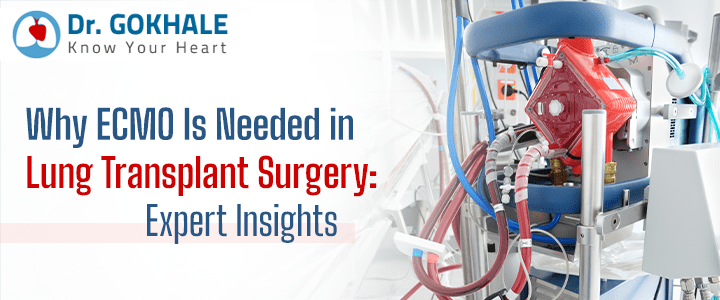
Lung transplants are complex and high‑risk. In many patients, the lungs fail long before a donor organ becomes available. In such cases, doctors must act quickly to stabilise the body while it waits. This is where ECMO comes in. It is not a cure, but a critical support system. When used correctly, it can be the difference between survival and irreversible decline.
Understanding ECMO and Its Role in Lung Transplant Surgery
ECMO, or extracorporeal membrane oxygenation, is a short-term life support system. It assumes the role of the lungs by taking the blood, oxygenating it outside the body and returning it to the body. In some cases, it also helps support the heart.
The technology is used in many settings, but the use of ECMO in lung transplant surgery plays a unique role. It supports patients who are unable to maintain adequate oxygen levels with the use of ventilation alone. It also helps the surgeons to operate safely by having stable circulation during surgery.
Why ECMO Is Needed During Lung Transplantation
Some patients with end‑stage lung disease become too sick to wait for surgery. Others go into the operating theatre with high oxygen requirements. In both cases, ECMO provides a bridge. It buys time without stressing the heart or lungs.
Why ECMO is needed in lung transplant is simple: it stabilises patients who might otherwise not survive the wait or the operation. It is particularly valuable in patients with pulmonary hypertension or those already on a ventilator.
During surgery, ECMO reduces pressure on the heart. It ensures steady oxygen delivery while the diseased lungs are removed and new lungs are connected. Surgeons have better control over blood flow and gas exchange. This improves surgical safety and post‑operative recovery.
Key Benefits of Using ECMO for High‑Risk Lung Transplant Patients
Not every transplant patient requires ECMO. But for those who do, the benefits are clear.
- It allows surgeons to perform the transplant even in unstable patients.
- It reduces lung trauma caused by mechanical ventilation.
- It improves oxygenation during surgery and in the critical hours after.
- It lowers the risk of primary graft dysfunction in certain cases.
- It offers better outcomes in select patients with severe pulmonary compromise.
These ECMO benefits in lung transplant patients are supported by growing evidence in critical care and transplant medicine. The decision to use ECMO depends on timing, diagnosis, and clinical judgement.
Expert Insights from Dr Gopala Krishna Gokhale
Many Indian surgeons are now adopting ECMO in transplant workflows. As a pioneering expert in the field, Dr Gopala Krishna Gokhale lung transplant experience has helped shape ECMO protocols suited to Indian patients.
Having worked on some of the most complex cases, he highlights the importance of early recognition. When patients are identified early for ECMO support, outcomes improve. He also stresses the need to customise ECMO settings for each case, especially in patients with both lung and heart involvement.
Those seeking a heart and lung transplant surgeon Hyderabad often refer to centres using ECMO routinely. This is because it reflects both infrastructure and skill. Surgeons who understand the balance between ECMO and surgical timing tend to see better long‑term recovery.
Conclusion
Not every transplant centre uses ECMO. But those who do often see better results in high‑risk patients. When comparing ECMO vs ventilator in lung transplant, the former offers more control, less trauma, and better gas exchange.
Those looking for the best lung transplant surgeon in Hyderabad often ask about ECMO access and experience. It is no longer just a backup. It is now a vital part of modern lung transplantation. And for the patients who need it, it provides not just oxygen but time, stability, and a better chance at survival.